The system that defies the void
Space is not empty. It is hostile. When NASA first propelled humanity beyond the atmosphere, the immediate challenge was not velocity or gravity. It was air. How do you keep a sealed environment — a closed, pressurised capsule holding precious biological life — from turning against itself?
They solved it. Quietly, methodically, with the precision that defines everything that leaves the ground at that altitude. Sub-Zero was inspired by that solution and placed it inside your kitchen. The engineering that kept a capsule breathable in orbit turned out to answer an ordinary domestic problem: a refrigerator is a sealed environment too, its air slowly turning against the very things it protects. Sub-Zero took that same principle — draw the air through, clean it, return it — and quieted it into something you never have to think about.
Roughly every twenty minutes, the entire volume of air inside the compartment is drawn through and returned clean. None of it was designed with kitchens in mind. That it belongs in one becomes obvious on an ordinary morning.
Sunday, and “the apples” are gone
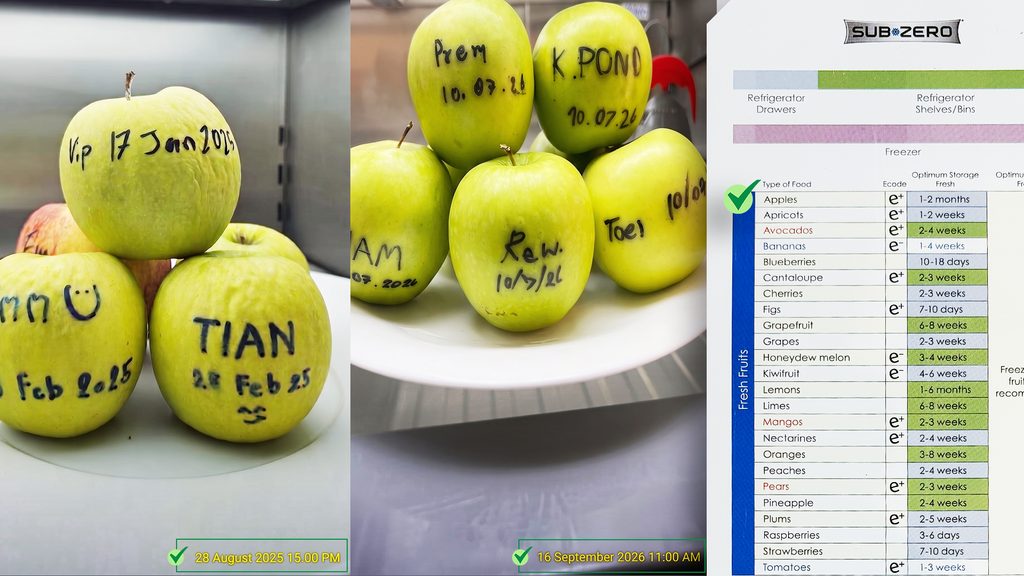
Sub-Zero’s own storage guide rates apples at one to two months. These went further. Signed, dated, and placed inside a Sub-Zero — one apple after two months (centre), another after seven (left). No spoiling. Just the faintest wrinkle where time should have won. This is what NASA-inspired air purification does to the clock.
Not spoiled exactly. Soft in the wrong places, the skin gone slack, the fragrance turned faintly alcoholic. They were bought firm on Thursday, from someone who knows which trees they came from. The avocados beside them have followed. So has the basil, which held four days and then collapsed overnight, the way basil does.
Nothing in that sequence was anyone’s fault. It was the air.
Fruit does not stop working when it is picked. It keeps going in the dark, and as it works, it releases ethylene — a colourless, faintly sweet gas that carries a single instruction to everything near it. Begin. In an orchard, the wind takes it away. In a sealed compartment it gathers, and the mangoes give the order to the avocados, and the avocados pass it on.
Southeast Asia grows the most eager fruit on earth. Apple, mango, durian, banana, papaya, jackfruit — all of them prolific producers of ethylene, all of them frequently in the same refrigerator, in air this warm.
This is the part Sub-Zero interrupts.
The system does not slow the fruit itself. Nothing can, and nothing should — a mango is meant to ripen. What it removes is the ethylene, drawn out of the air before it can accumulate, so the instruction never reaches the shelf beside it. Each piece then ripens on its own clock rather than being hurried along by whatever happens to be sitting next to it. The mango ripens as a mango would. It stops recruiting the avocados.
Which is why the difference arrives as time rather than as anything you can see.
Saturday’s fish is still Saturday’s fish on Tuesday. The basil reaches the weekend with its scent intact. The stone fruit arrives at the moment it was waited for and stays there, rather than sliding past while Wednesday’s dinner is moved and Thursday’s flight runs late.
Keeping every smell to itself
Ethylene is not the only thing moving through that air.
Odour travels the same way, in the same currents, and it is drawn out on the same twenty-minute cycle. So the compartment does more than hold its produce. It keeps everything inside it separate — the fish to itself, the cheese to itself, nothing borrowing the character of anything else.
And the door, when it opens, smells of almost nothing. Durian season is the honest test. Anyone who cooks here knows exactly what that test means.
Underneath all of it sits a smaller thing, and it is the part owners tend to mention unprompted.
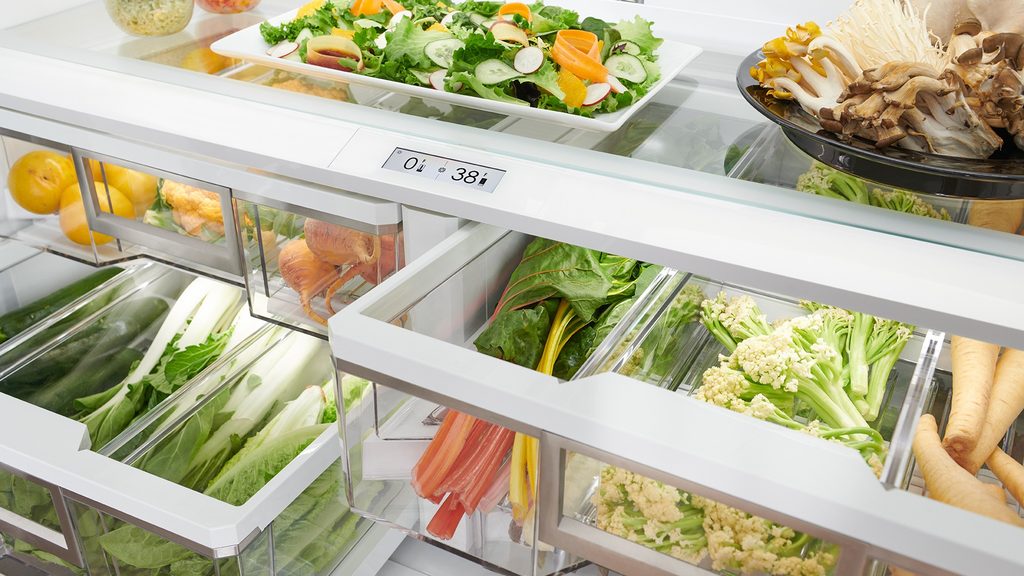
A refrigerator that holds its condition removes an entire category of daily judgement — what must be used tonight, what will not survive the trip, what to do about the herbs. No single one of those decisions is heavy. There are simply hundreds of them a year, and they fall to the person with the least time to spare.
Nobody notices any of this while it is working.
It is noticed on the Sunday it isn’t — which is, in the end, the only honest test of anything installed in a kitchen.
Visit our House of Sub-Zero & Wolf SEA showroom for more info about Sub-Zero.
FAQ
It reduces ethylene gas and odor, cycling the compartment’s air approximately every twenty minutes. Ethylene is released naturally by ripening fruit and accelerates the ripening of everything near it.
Yes — it derives from ethylene-scrubbing systems developed for growing plants in sealed environments in space.
No. Sub-Zero states the system greatly reduces rather than eliminates bacteria. Its substantiated function is ethylene and odor reduction.
Approximately every six months, reflecting regional humidity and heat.