Stainless steel arrived in restaurants because it could be scrubbed hard, took heat without complaint, and did not absorb what was spilled on it. The grid of surfaces, the exposed banks of equipment, the absence of anywhere for anything to hide, all of it answered a working problem. Nobody was expected to admire it. Guests never went in.
That language has been crossing into private houses for three decades. What has changed is the confidence with which it is now being done, and the fact that clients ask for it by name.
Southeast Asia complicates the idea in a way the European and American versions of this conversation never have to address.
Across much of the region, the back-of-house already exists. Serious cooking happens somewhere else, behind a door, at the back, or outside the house altogether. The sambal, the wok work, the charcoal, the long-simmered stock: none of it was ever intended for the room where guests are received. The professional kitchen here was not concealed behind integrated cabinetry. It was simply put where the smoke could go.
So the question is not whether to expose the working kitchen. It is which working kitchen is being exposed, and how honest the exposure is.

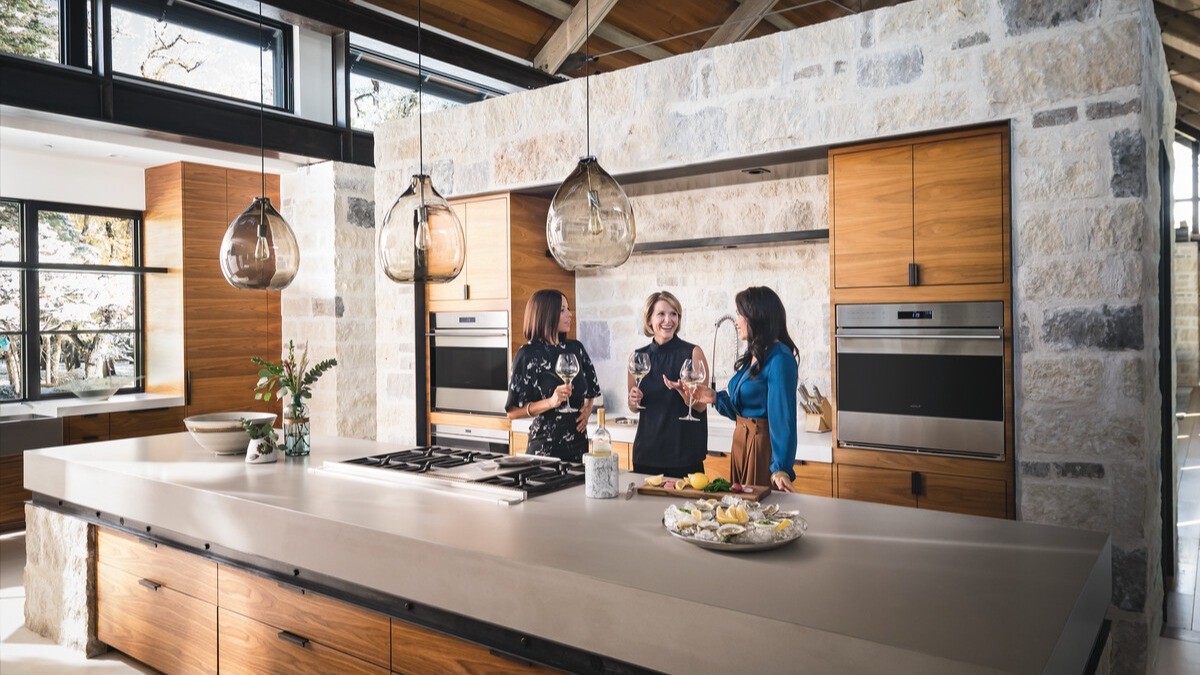
What is now being specified in the region’s best houses is not an imported loft. It is a presentation kitchen given the equipment and surfaces of a real one, so that cooking in front of people becomes possible rather than performative, while the heavy work carries on where it has always been done. Two rooms, both genuine, neither pretending.
That decision creates a material problem, and this is where the design work actually happens.
Steel is a reflector. It carries no colour of its own; it borrows from everything around it. Which is why a stainless kitchen surrounded by white walls and pale stone reads as clinical, and the same steel surrounded by warmer material reads as something else entirely.
The metal is not cold. The palette is.

The corrective is close at hand, and this region is not short of it. Hand-glazed tile, uneven in colour, catching light differently across a single wall. Teak and chengal, which behave properly in humidity and improve with wear. Limewash and soft plaster, which absorb light where steel throws it back. Volcanic stone. Locally mixed terrazzo. Silk and rattan, used sparingly, where a room needs texture rather than another hard surface.
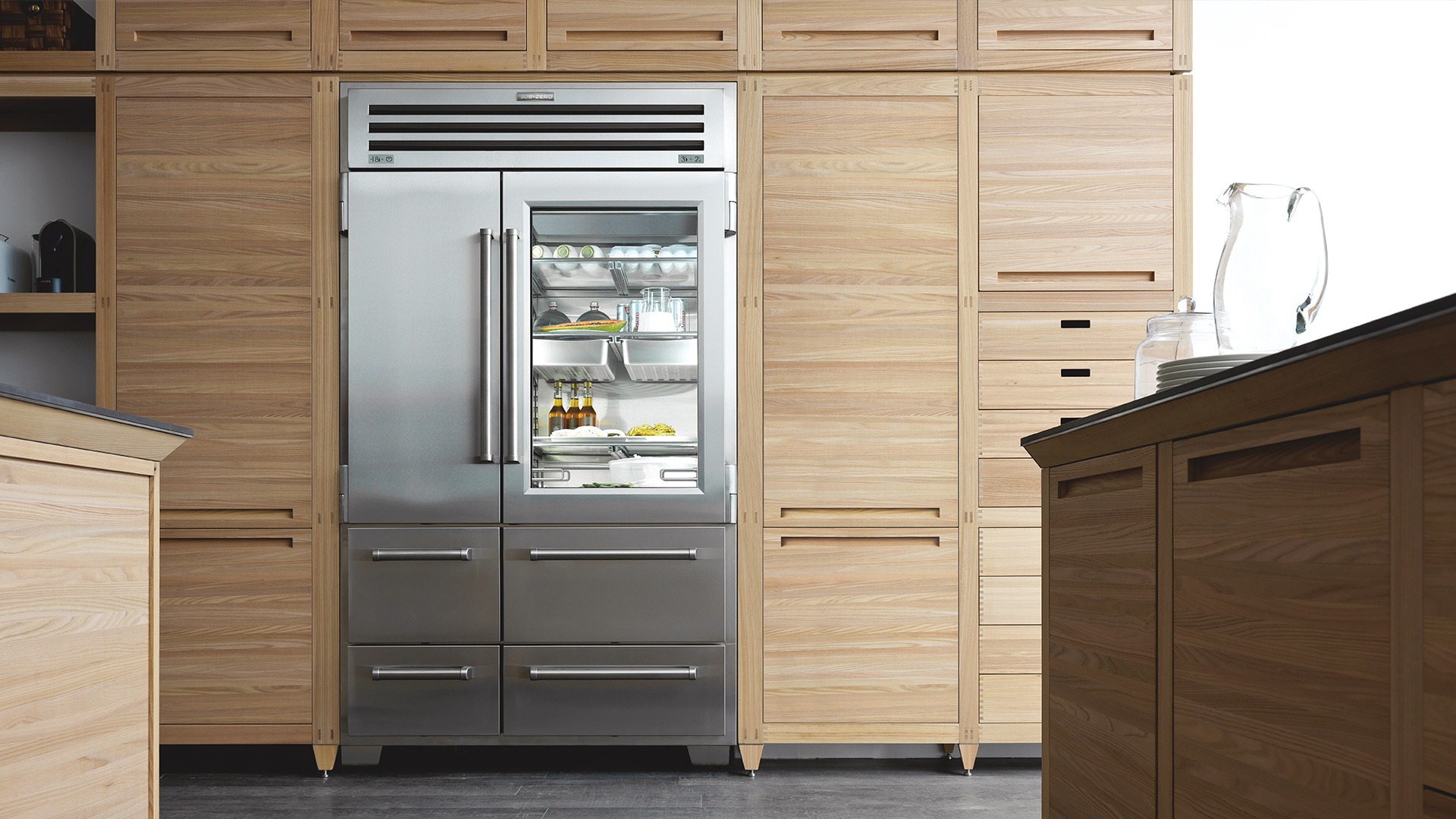
A workable ratio: steel on the horizontal planes where it earns its place, worktops, splashbacks, the equipment itself, and warmth everywhere the hand and the eye come to rest. Floors, walls, seating, ceiling.


The room then reads as a workshop rather than a laboratory, and the distance between those two words is the entire brief.
Sub-Zero and Wolf belong in this conversation because they did not arrive at it as a style. Wolf built equipment for people who cooked for a living and judged it accordingly. The proportions, the weight of the controls, the way a range holds its finish through years of heavy use- none of it was designed to look professional. It was designed to that standard, and the appearance followed.
Which is the test for the whole approach.

A kitchen that borrows the language of the back-of-house without the substance is set dressing, and it shows within a year or two of ordinary use.
The rooms that hold up are the ones where the steel is doing something.
Other article
Book a showroom appointment
A presentation kitchen, often referred to as a dry kitchen, is a fully operational architectural space designed for guest interaction, light culinary preparation, and entertaining. It is typically equipped with premium, commercial-grade appliances like Sub-Zero and Wolf, while heavy, high-smoke, and aromatic cooking is relegated to a separate back-of-house “wet kitchen.
To prevent a stainless steel kitchen from feeling clinical, architects must balance the metallic grid with warm, organic materials. This is achieved by reserving steel for horizontal working planes and appliances, while surrounding it with textured elements like teak, limewash plaster, volcanic stone, and hand-glazed tiles on the vertical planes and flooring.
True commercial-grade appliances offer uncompromising structural integrity, exact heat control, and heavy-duty longevity that standard consumer appliances cannot replicate. Incorporating brands engineered with a commercial heritage ensures the kitchen delivers actual culinary performance rather than merely serving as an architectural set dressing.
In tropical and Southeast Asian architecture, the wet kitchen is an enclosed, highly ventilated back-of-house space designed for heavy, aromatic, and high-heat cooking. The dry kitchen is positioned in the primary living space, functioning as a sophisticated presentation and entertaining area featuring luxury appliances and bespoke architectural finishes.